
Chalet insurance for the property your home policy won’t cover
Chalet insurance from an independent broker who takes the time to understand your property. Holiday chalets, beach chalets, timber construction and park-sited units. Since 1970.
Rated 5 stars by 3,661 customers on Trustpilot
Your Chalet insurance
Your chalet is not a house, and your insurer knows it.
Standard home insurance is priced on the assumption that somebody sleeps there most nights, the walls are brick, and nobody pays to stay. A chalet usually fails all three tests. Which is why chalet owners find out their policy was never valid at the worst possible moment: after the claim.
Sharrocks has been arranging cover for holiday chalets, beach chalets and timber chalets on the Kent coast and across the UK since 1970. We are an independent, FCA authorised broker, which means we place your risk with insurers who actually write this class rather than squeezing it into a household policy that was never designed for it.
Why standard home insurance will not cover a chalet
Home insurance is built around one idea: a permanently occupied main residence, of standard construction, lived in by the people who own it. Underwriters price the whole policy on that assumption. A chalet breaks it in three places at once.
Occupancy. Almost every household policy contains an unoccupancy clause. Leave the property empty beyond a set period, commonly 30 to 60 days depending on the insurer, and cover for escape of water, theft and malicious damage falls away automatically. You do not get a warning. A chalet used for weekends and summer holidays sits empty for most of the year by design, so the clause is triggered permanently rather than occasionally.
Construction. Household policies are rated for standard construction: brick or stone walls under a slate or tile roof. Timber walls, timber cladding, felt or single ply roofing, and raised or piled foundations all fall outside that definition. Insurers call this non-standard construction, and most household schemes simply decline it.
Use. The moment a chalet is let to paying guests it stops being a private dwelling and becomes a commercial letting risk. Household public liability does not extend to members of the public paying to be on your property.
The result is the same in each case. The policy may still be in force and the premium may still be collected, but the specific loss you have just suffered sits outside what the insurer agreed to cover.
Chalet insurance exists because the risk needs rating on its own terms.
What chalet insurance covers
A specialist chalet policy is built around how a chalet is actually used rather than how a house is used. Cover is arranged to suit the individual risk, and the components below are the ones we most commonly place.
Buildings. The structure itself, on a rebuild cost basis, including damage from fire, flood, escape of water, impact, theft and malicious damage.
Contents. Furniture, white goods, soft furnishings and personal effects inside the chalet. Chalet contents sit unattended for long periods, which is precisely why they need rating separately from a household contents policy.
Outbuildings and external structures. Decking, verandas, steps, ramps, storage sheds, fencing and hot tub housings.
Public liability. Cover for injury to visitors or damage to their property. Essential if anyone other than your own household ever sets foot on the site, and the indemnity limit is set to suit the site and how the chalet is used.
Loss of rent or alternative accommodation. If the chalet becomes uninhabitable after an insured loss, cover for the rental income you lose or the cost of housing your own family elsewhere.
Accidental damage. Usually optional, and usually worth taking on a property where other people handle your belongings.
What is not covered matters as much. Wear and tear, gradual deterioration, damage from lack of maintenance, frost damage where the water system has not been drained down over winter, and losses occurring while the chalet is unoccupied beyond the period stated in your policy. Every insurer words these differently, and the differences are where claims are won and lost.
Holiday chalets let to guests
Letting changes the risk completely, and it changes what you need.
The moment you accept money for a stay, you take on a duty of care to people you have never met, in a building you are not present in. If a guest slips on wet decking, trips on a loose step or is injured by a faulty appliance, the claim lands on you. Household public liability will not respond, because the policy was never rated for commercial letting.
A let chalet needs:
Public liability for paying guests. The core protection. Booking platforms and letting agents increasingly require evidence of it before they will list you, and some sites will not accept a booking without it.
Loss of rental income. If the chalet is out of action for a season after a fire or flood, the lost bookings are often a larger financial hit than the repair bill itself.
Damage and theft by guests. Standard contents cover typically excludes theft by a person lawfully on the premises. Guests are lawfully on the premises. Without a specific extension, a stripped chalet after a bad booking is your loss.
Employers liability. If you pay a cleaner, a caretaker or a changeover team, even casually, you are almost certainly an employer under the Employers’ Liability (Compulsory Insurance) Act 1969. Cover is a legal requirement, not an option.
Tell us how often you let, to whom, and through which platform. Underwriters price occasional family use very differently to a full commercial letting season, and declaring it accurately is what keeps the policy valid.
Get a quote
Every holiday home is different. Call us on 01795 580 800 or request a callback and one of our advisers will find the right cover for your specific property and how you use it.
We understand coastal chalets because we insure them from one.
Sharrocks operates from a Grade II listed windmill on the Isle of Sheppey, on the Kent coast, in an area with one of the highest flood risks in the country. Our own building has suffered a fire. We are not writing about coastal risk from an office in a city centre. We are sitting in it, and we have been placing cover along this coastline for over fifty years.
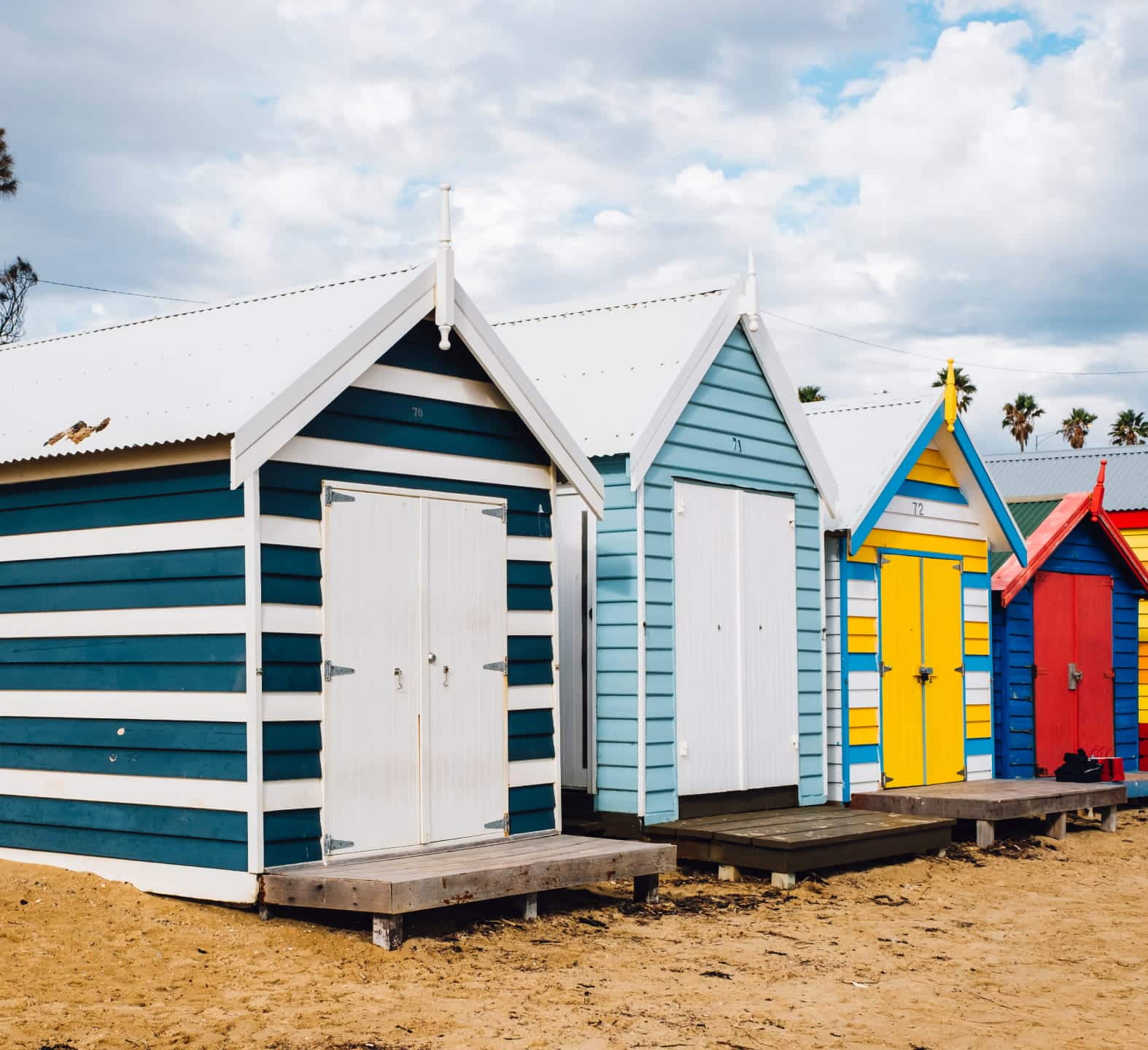
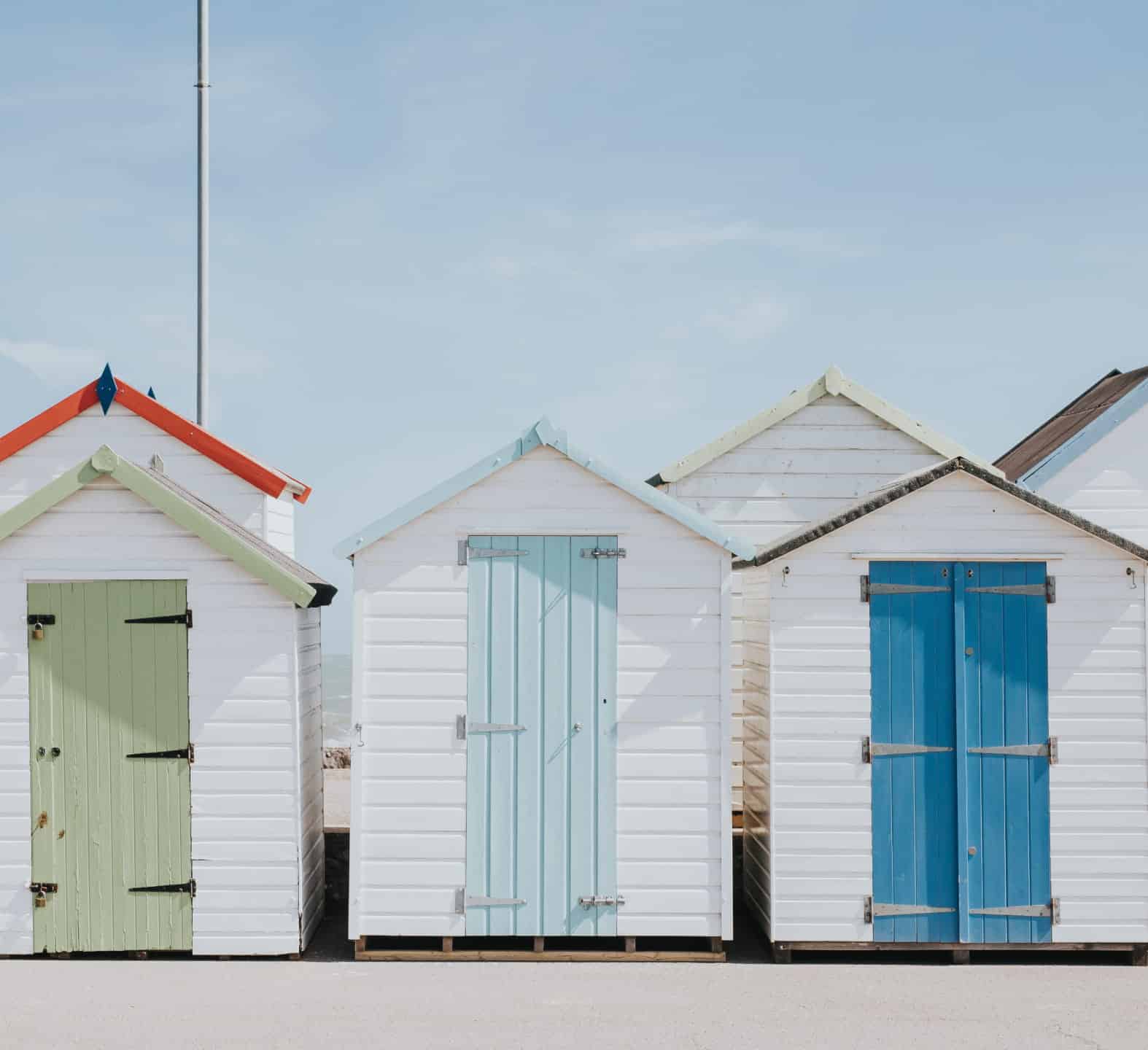
Beach chalets and coastal chalets carry exposures that inland properties simply do not:
Tidal and surge flooding
Distinct from river or surface water flooding, rated differently, and excluded outright by many standard schemes. Postcode level flood data drives the decision, and a chalet two hundred metres from another can be rated completely differently.
Storm and wind damage
Exposed coastal sites take the full force of weather with nothing between them and the sea. Roofs, cladding, verandas and outbuildings are the usual casualties.
Salt corrosion
Constant salt air degrades metal fixings, external cladding, guttering and window frames. Insurers will look closely at maintenance, because gradual deterioration is excluded on every policy in the market. Documented upkeep protects your claim.
Seasonal occupancy restrictions.
Many beach chalets and beach huts sit under local authority licences that prohibit overnight stays or restrict use to defined months. This affects both the occupancy position and, in some cases, the basis of settlement.
If your chalet is on the Isle of Sheppey, at Leysdown, Minster, Warden Bay or anywhere along the North Kent or Essex coast, speak to us directly. Local knowledge is the difference between a declined risk and a placed one.
Timber and wooden chalet construction: what insurers ask
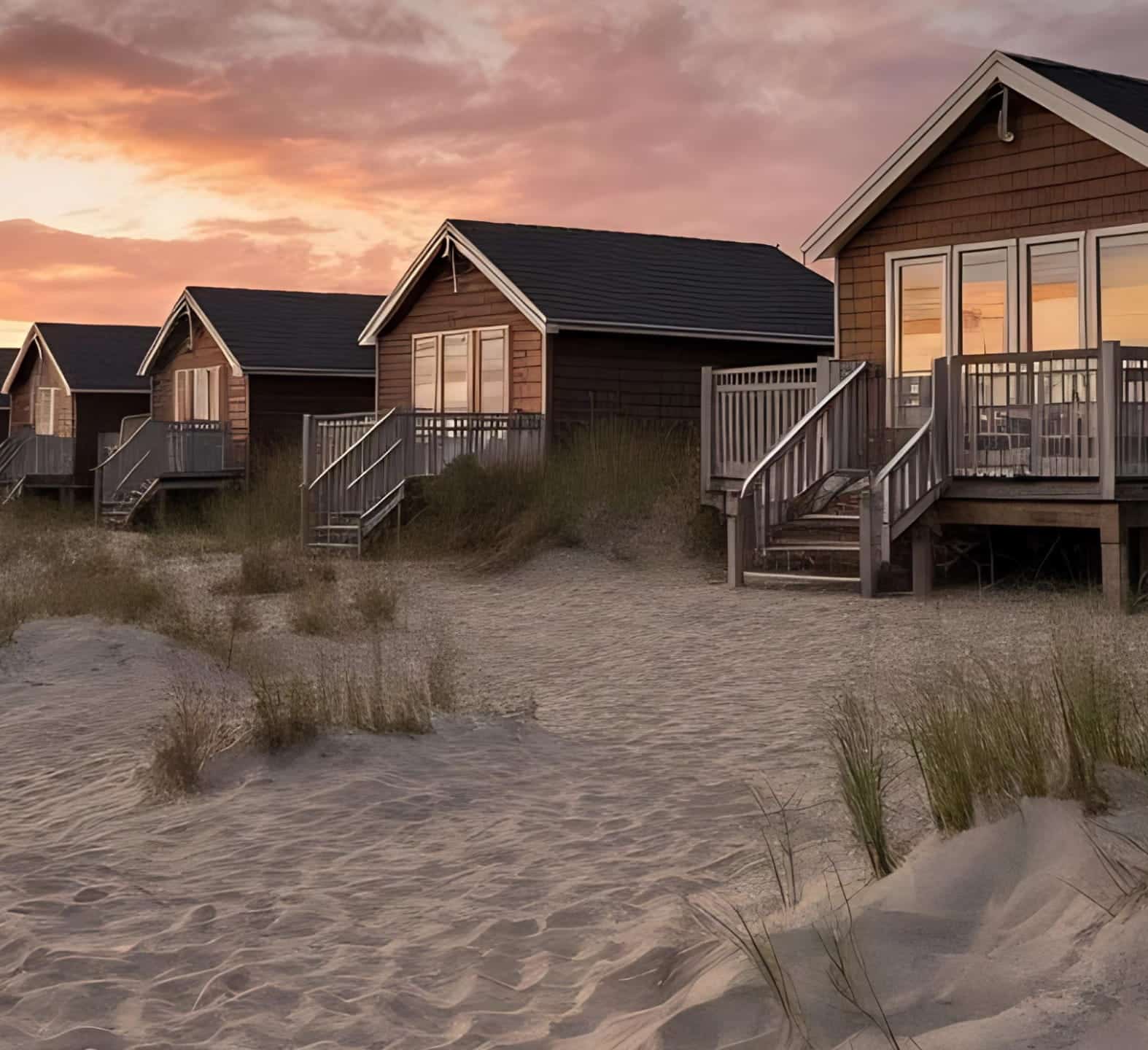
Timber chalets are not uninsurable. They are non-standard, and non-standard means underwritten individually rather than by algorithm. Expect these questions, and have the answers ready.
What are the walls made of, and what is the frame?
Solid timber, timber frame with cladding, and timber frame with a brick or block outer skin are three different risks at three different prices.
What is the roof?
Felt, single ply membrane, EPDM, slate, tile or metal. Age and last replacement date matter as much as material.
How old is it, and has it been treated?
Preservative treatment, fire retardant treatment and the date of the last inspection all count.
How far is it from the nearest structure?
Fire spread between closely spaced timber units is the single biggest underwriting concern on a chalet park. Distance to the neighbouring chalet is often the deciding factor.
How is it heated, and what is the electrical installation like?
Solid fuel burners, LPG and portable heaters attract scrutiny. A current electrical installation condition report helps considerably.
Are there trees nearby, and how close?
Overhanging or nearby trees are a live underwriting question on chalet risks. One of our clients raised exactly this concern, and their file handler went back to the insurer to get the position confirmed and recorded on the policy before it was accepted. That is what having a broker is for.
If your chalet has been declined elsewhere for construction reasons, that is not the end of the conversation. It is the start of ours.
Chalets on licensed holiday parks
If your chalet sits on a licensed holiday park, there are two things worth knowing.
The park’s insurance does not cover your chalet. It covers the park: roads, communal buildings, grounds and the operator’s own liability. Your unit, its contents and your liability as its owner are yours to arrange. Owners discover this gap surprisingly often, and usually late.
You are not obliged to buy the park’s scheme. Many parks offer or strongly encourage an insurance product at the point of sale, and many owners assume it is a condition of the pitch agreement. Read the agreement. Most require you to hold cover meeting a stated minimum standard, not to hold cover from a particular provider. Independent placement is almost always available and frequently better rated.
What the park will require is evidence: a certificate or schedule showing your cover meets the minimum specified in the licence agreement, usually a defined public liability limit and buildings cover on a full rebuild basis. Send us the agreement and we will make sure the policy meets it.
Pitch fees, site licence conditions and seasonal opening restrictions all affect the risk. Tell us about them upfront.
How much chalet insurance costs
There is no single price for chalet insurance, and anyone quoting one without asking questions is guessing.
Premiums are driven by a defined set of factors. These are the ones that move the number most:
Rebuild value, not market value. What it would cost to rebuild the chalet from scratch, including debris removal and professional fees. Under insure here and any claim can be reduced proportionally under the average clause.
Location and flood exposure. Postcode level flood and coastal surge data is the single biggest driver on a coastal chalet.
Construction. Timber and other non-standard construction attracts a different rate to brick and tile.
Occupancy pattern. Private family use, occasional letting and full commercial letting are three different risks.
Claims history. Yours, and in some cases the site’s.
Security and maintenance. Locks, alarms, water systems drained over winter, documented upkeep and a current electrical report all help.
Excess and cover level. A higher voluntary excess reduces the premium. Accidental damage and higher liability limits increase it.
Two chalets that look identical from the road can be rated very differently once an underwriter has the postcode, the construction detail and the occupancy pattern in front of them. That is why we quote on the individual risk rather than publishing a headline rate that turns out not to apply to you.
Send us the details and we will come back with a figure that reflects your chalet, not an average of everybody else’s.
Get a chalet insurance quote
Tell us about the chalet and we will do the work. Where it is, what it is built from, how you use it and what it would cost to rebuild is enough to start.
Once your policy is in place you are assigned a named file handler who deals with your policy directly, for the life of the cover. Not a call centre queue. The same person, who knows your chalet.
Call 01795 580 800 Email enquiries@sharrock-insurance.com Or complete the chalet insurance quotation form
Sharrocks Insurance Services. Independent broker, established 1970. Authorised and regulated by the Financial Conduct Authority, reg. 502369.
Business Insurance
What our customers say

I had a few questions to ask about my renewal. Abby sorted everything out. i was left feeling very pleased.
Great service, good price, fast, friendly & efficient, Natalie Jacobs was a star 🙂
I’ve been using Sharrocks for over 20 years and have always received a personal and professional service. The staff are consistently helpful, and Alan has always been there to assist whenever needed...
Quite often it’s hard to get a decent representative who’s honest in the insurance world. Spoke to Cher who was absolutely honest with what type of insurance I needed for my company. She explained eve...
Very good service from Maddie Lilley, she was very professional and efficient in finding my insurance, she always called me back as promised, and sorted out my insurance quote for me.
Sharrocks have been very helpful to me over many years providing me with my Public & Employers Liability Insurance I can’t fault them in anyway.
Thankyou for your continued service.
Rated 4.9 out of 5 based on 3,386 reviews on
Chalet insurance frequently asked questions
Does home insurance cover a chalet?
Usually not. Standard home insurance is rated for a permanently occupied main residence of standard construction. A chalet typically breaks that on occupancy, construction or both, and any letting to paying guests takes it outside a household policy entirely. Cover may appear to be in force right up until the claim is declined.
What insurance do I need for a beach chalet?
Buildings cover on a rebuild basis, contents, and public liability if anyone other than your household uses it. Coastal chalets need flood and storm exposure rated specifically, and many standard schemes exclude tidal flooding outright. Local authority licence conditions restricting overnight use should also be declared.
Can you insure a wooden chalet?
Yes. Timber construction is non standard rather than uninsurable, and it is underwritten individually. Insurers will ask about the frame and cladding, roof material and age, preservative or fire retardant treatment, heating type, electrical condition and distance to neighbouring structures.
Is chalet insurance different from static caravan insurance?
They overlap but they are not the same. Static caravans are usually rated as transportable units with their own construction and siting considerations, while chalets are typically rated closer to a fixed building. A specialist broker will place each with insurers who write that specific risk.
Do I need chalet insurance if my park already has cover?
Yes. The park’s policy covers the park itself: communal buildings, grounds, roads and the operator’s own liability. Your chalet, its contents and your liability as owner are not included. Most pitch agreements require you to hold your own cover to a stated minimum, but very few require you to buy it from the park.
How much does chalet insurance cost per year?
There is no single rate. Premiums are driven by rebuild value, location and flood exposure, construction type, how often the chalet is used and whether it is let, claims history, and the level of cover and excess chosen. A coastal timber chalet let to guests and a brick chalet in private family use are two very different risks, so both are quoted individually.
Can I insure a chalet I let out to holidaymakers?
Yes, and you should declare the letting. A let chalet needs public liability for paying guests, cover for damage or theft by guests, loss of rental income, and employers liability if you pay anyone to clean or maintain it. Undeclared letting is one of the most common reasons a chalet claim is refused.
Does chalet insurance cover flood?
It can, but it is rated individually and it is the single biggest factor on a coastal chalet. Tidal and surge flooding is treated differently to river and surface water flooding, and some standard schemes exclude it. Placement depends on postcode level flood data and the specific site.